What Is Orthodontics and Why Does It Matter for Your Smile?
If you’ve been thinking about straightening your smile in San Marcos, you’re probably wondering where to start. Orthodontics is the dental specialty dedicated to diagnosing, preventing, and correcting misaligned teeth and jaws. It goes well beyond straight teeth. A well-aligned bite supports your oral health, your breathing, and your confidence for years to come.
Board-certified orthodontists complete two to three years of specialized training beyond dental school. That advanced education focuses specifically on tooth movement, jaw growth, and facial development. It’s a level of expertise that general dentists simply don’t have, and it makes a real difference in treatment outcomes.
Modern orthodontic care has come a long way from the bulky brackets and headgear of decades past. Today’s treatment options include modern metal braces, clear braces, clear aligners, and orthopedic appliances that guide jaw development. Each approach serves different needs, and the right choice depends on your unique situation. A qualified orthodontist can walk you through every option during your free consult.
The focus has expanded well beyond cosmetics in recent years. Yes, a beautiful smile matters. But orthodontists now address functional concerns like bite problems, jaw discomfort, and even airway issues that affect sleep and breathing. Treating the bite, the jaw, and the airway together creates results that hold up over time.
Orthodontic care benefits patients at every stage of life. Children can start early with interceptive treatment that guides jaw growth. Teens often complete treatment during their high school years. And adults? There’s no age limit. More adults than ever are choosing to invest in their smiles, and treatment options like clear aligners make it easier than ever to do so discreetly.
According to the American Association of Orthodontists, one in four orthodontic patients today is an adult. That number continues to grow as treatment becomes more accessible and less noticeable.
Maybe you’re here for yourself, your teen, or your little one. No matter where you’re starting, understanding how orthodontics works is the first step toward making an informed decision.
How Orthodontic Treatment Works: From Consultation to Final Results
Orthodontic treatment follows four stages: initial consultation, appliance placement, regular progress visits, and retention. The process breaks down into four stages, and knowing what to expect at each one helps you feel prepared from day one.
Your Initial Consultation
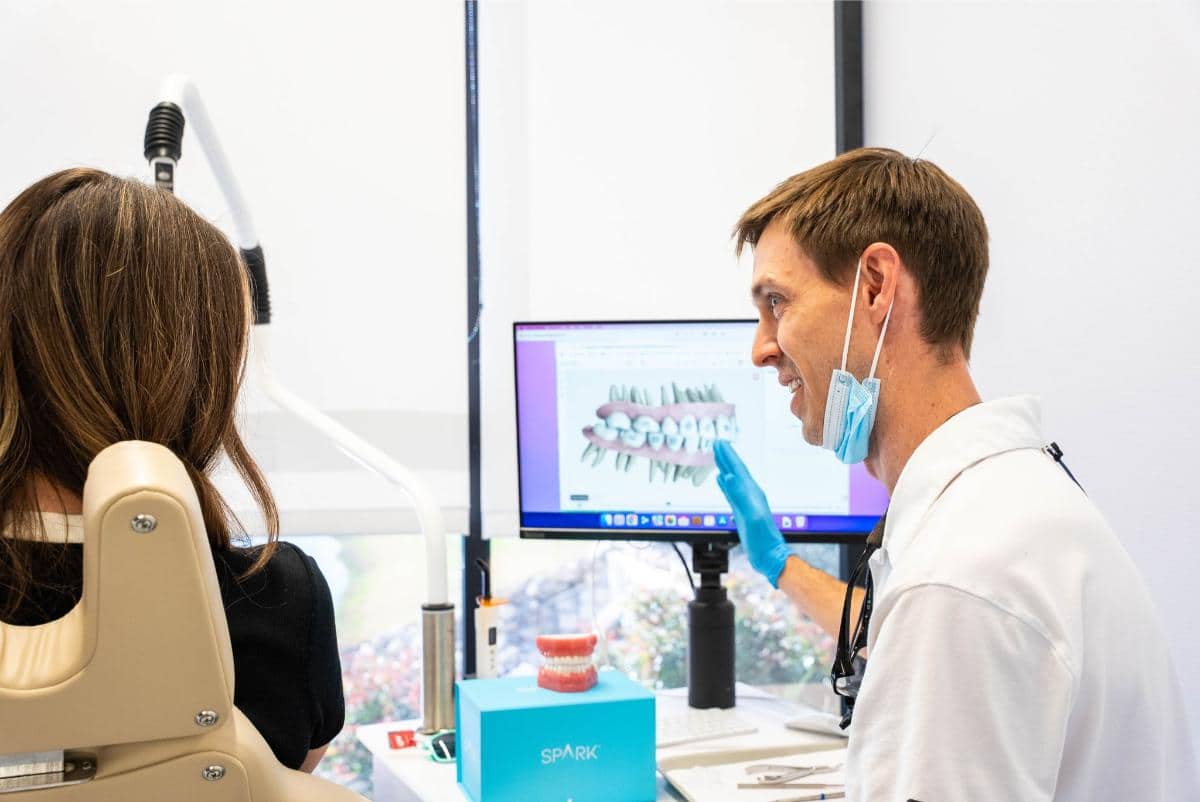
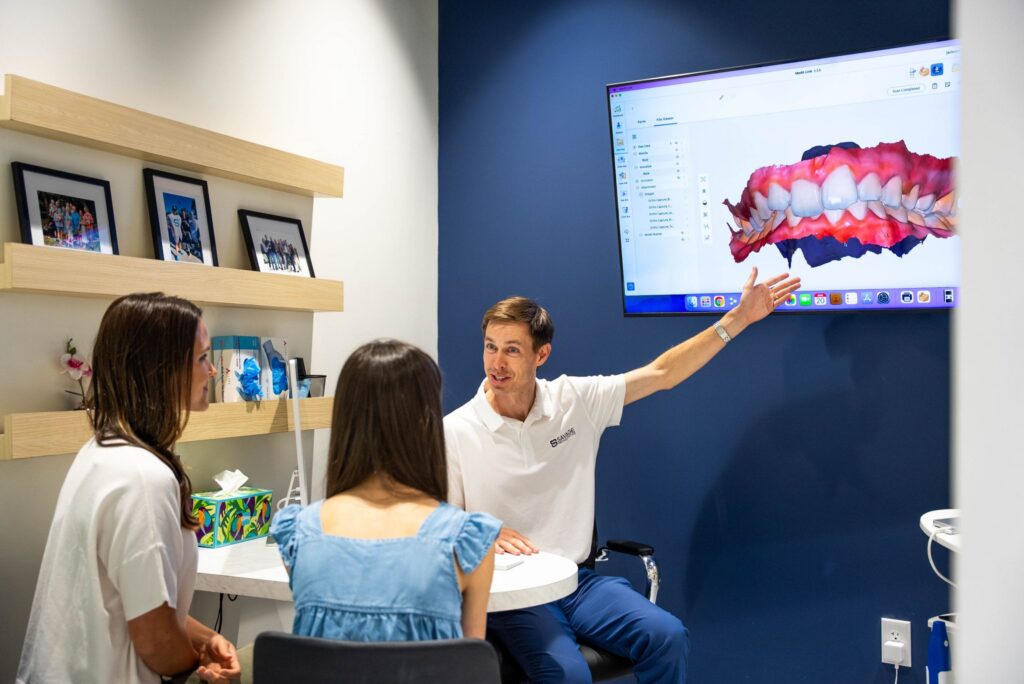
Everything starts with a thorough evaluation. During your free consult, you’ll meet with your orthodontist for a full assessment of your teeth, bite, and jaw alignment. This appointment usually includes digital imaging, X-rays, and photographs that help create a detailed picture of your oral health.
Your orthodontist will take time to understand your goals and concerns. From there, you’ll leave knowing exactly what treatment involves, how long it will take, and what your investment will be. No surprises.
Appliance Placement or Aligner Fitting
Once you’re ready to begin, the next step is getting your braces placed or receiving your first set of aligners. For braces, this appointment typically takes about an hour. Your orthodontist carefully positions each bracket and connects them with wires that will guide your teeth into proper alignment.
If you’ve chosen clear aligners, you’ll receive your custom-designed trays along with instructions for wearing them. Patients typically wear each set for one to two weeks before switching to the next in the series.
Regular Progress Visits
Orthodontic treatment isn’t a “set it and forget it” situation. You’ll return to the office every four to eight weeks for adjustments. During these visits, your orthodontist monitors your progress, makes necessary modifications, and confirms everything is moving according to plan. Appointments are usually quick, around fifteen to thirty minutes, and you’re on your way.
The Retention Phase
Something many people don’t realize: the work doesn’t end when your braces come off. Your teeth have a natural tendency to shift back toward their original positions. That’s why the retention phase matters so much.
You’ll receive custom retainers designed to maintain your results long-term. Retainers are typically worn full-time at first, then transitioned to nighttime wear. This simple habit protects your investment and keeps your smile looking great for life.
How Long Does Orthodontic Treatment Take?
Treatment timelines vary, but the majority of orthodontic cases wrap up within 12 to 24 months. Simple cases with minor crowding might finish faster. Complex cases involving significant bite correction may take longer. Your orthodontist will give you a realistic timeline during your consultation, so you know what to expect from the start.
Key Benefits of Professional Orthodontic Care
Professional orthodontic treatment delivers benefits that go well beyond a straighter smile. From better oral hygiene to improved breathing, the results touch nearly every part of your daily life.
How Does Orthodontics Improve Oral Health?
Crowded or overlapping teeth create tight spaces where food particles and bacteria love to hide. Even with diligent brushing and flossing, those areas are tough to reach. Straight teeth are simply easier to keep clean, which means fewer cavities, healthier gums, and lower risk of periodontal disease over your lifetime.
Your long-term dental health benefits in another way, too. Properly aligned teeth distribute chewing forces evenly across your bite. That protects individual teeth from excessive wear and reduces the risk of chips, cracks, and other damage. You’re looking at fewer dental problems and lower repair costs for years to come.
Can Orthodontics Help With Jaw Discomfort and Headaches?
When your bite is off, your jaw muscles work overtime to compensate. That strain can lead to chronic jaw soreness, frequent headaches, and even TMJ disorders. Correcting bite issues allows your jaw to function the way it’s designed to, and patients often report significant relief once their bite is properly aligned.
Severe misalignment can also affect how you pronounce certain sounds and how efficiently you chew your food. Orthodontic correction often improves both, which is something patients don’t always expect going in.
What About Breathing and Airway Benefits?
Airway health is a growing focus in orthodontics, and for good reason. A narrow palate or recessed jaw can restrict the airway, contributing to mouth breathing, snoring, and sleep-disordered breathing. Orthopedic treatment can help expand the palate and improve airway space.
The results often go beyond the mouth. Patients report deeper, more restful sleep and better focus during the day. For children especially, addressing airway concerns early can make a meaningful difference in development and quality of life.
How Does a Straighter Smile Boost Confidence?
Let’s be honest. When you love your smile, you show it more. Patients tell us that a great smile gives them the confidence to laugh freely, speak boldly, and show up differently in their daily lives. You can’t put a number on that kind of change, but you’ll feel it every day.
Orthodontic treatment isn’t just about looking good. It’s about feeling good and setting yourself up for a lifetime of better oral health.
Comparing San Marcos Orthodontic Options: Metal Braces vs. Clear Braces vs. Clear Aligners
One of the most common questions patients ask is: “Which type of braces is best?” The honest answer is that it depends on your specific needs.
| Feature | Modern Metal Braces | Clear Braces | Clear Aligners |
|---|---|---|---|
| Visibility | Most noticeable | Less noticeable (ceramic) | Nearly invisible |
| Best For | All case types, including complex | Moderate to complex cases | Mild to moderate cases |
| Removability | Fixed | Fixed | Removable |
| Treatment Time | Often fastest | Similar to metal | Varies by case |
| Cost | Most affordable | Mid-range | Mid to higher range |
| Maintenance | Regular adjustments | Regular adjustments | Tray changes at home |
What Are Modern Metal Braces?
Don’t let the word “traditional” fool you. Today’s metal braces are smaller, more comfortable, and more efficient than ever. They remain the most versatile option, capable of handling everything from minor crowding to complex bite issues. A board-certified orthodontist often recommends metal braces for complex cases because of their precision and reliability.
Metal braces are often the fastest treatment option and typically the most affordable.
How Do Clear Braces Compare?
Clear braces use ceramic brackets that blend with your natural tooth color. They work the same way as metal braces, but with their clear-colored brackets, they attract less attention. Many teens and adults appreciate this more subtle look while still getting effective treatment.
Are Clear Aligners Right for You?
Clear aligners use gentle pressure on your teeth, gradually shifting them into the right position. They’re custom-designed for every smile and offer convenient, accessible care with a removable design.
The removable trays mean you can eat whatever you want and maintain your normal brushing and flossing routine. Clear aligners work best for mild to moderate misalignment. Complex cases involving significant bite correction may still require braces.
When Are Orthopedic Appliances the Best Option?
For younger patients whose jaws are still developing, orthopedic treatment focuses on guiding the growth and position of the jaws. Early intervention with orthopedics can sometimes reduce the need for more extensive treatment later. It’s one reason the AAO recommends children have their first orthodontic evaluation by age seven.
How Do You Choose the Right Treatment?
The best treatment option is the one that addresses your specific concerns effectively. A board-certified orthodontist can evaluate your teeth, bite, and jaw alignment, then recommend the approach that will give you the best results. Every patient is different, and the right plan depends on your goals, your lifestyle, and the complexity of your case.
What Does Orthodontic Treatment Cost?
Orthodontic treatment in San Marcos typically costs between $3,000 and $8,000 depending on treatment type and case complexity. Modern metal braces range from $3,000 to $7,000, clear braces from $4,000 to $8,000, and clear aligners from $3,500 to $8,000.
Let’s talk numbers. Orthodontic treatment is an investment, and it’s natural to want to understand what you’re looking at financially before you commit.
Costs vary based on several factors: the type of treatment you choose, the complexity of your case, and how long treatment takes. A straightforward case with minor crowding will cost less than a complex case requiring significant bite correction.
Keep in mind that these ranges are estimates. Your actual cost depends on your individual treatment plan. That’s why a free consult is so valuable. You’ll get a specific quote based on your needs, not a generic estimate.
How Can You Make Treatment Affordable?
Your budget shouldn’t hold back the quality of your care. Many San Marcos orthodontic offices offer 0%-interest financing that spreads the cost over the course of treatment. Flexible payment plans make orthodontic care accessible to more families without requiring a large upfront payment.
Does Insurance Cover Orthodontic Treatment?
If you have dental insurance, check whether it includes orthodontic benefits. Many plans cover a portion of treatment, especially for patients under 18. Coverage varies by plan but can offset a meaningful portion of the total cost.
Even partial coverage makes a real difference. Your orthodontic team can help you understand your benefits and maximize your insurance contribution.
Is Orthodontic Treatment Worth the Investment?
When you consider the long-term benefits of orthodontic treatment, the investment makes sense. Straight teeth are easier to maintain, which means fewer dental problems down the road. A healthy bite protects your jaw joints and your teeth from excessive wear. And the confidence boost? That speaks for itself.
It’s money spent on something you’ll use every single day for the rest of your life. Hard to say that about most purchases.
Who Is a Good Candidate for Orthodontic Treatment?
Nearly anyone with healthy teeth and gums can benefit from some form of orthodontic care. Age, lifestyle, and specific dental concerns all play a role in determining the right time and approach.
When Should Children See an Orthodontist?
The American Association of Orthodontists recommends that every child have their first orthodontic evaluation by age seven. By that age, enough permanent teeth have emerged for an orthodontist to identify potential problems. Early detection allows for interceptive treatment that can guide jaw growth and create space for incoming teeth.
Not every child who comes in at seven needs treatment right away. Many don’t. But early evaluation ensures nothing gets missed.
Signs your little one might benefit from an orthodontic evaluation:
- Early or late loss of baby teeth, which can signal spacing or crowding issues
- Difficulty chewing or biting food
- Mouth breathing or snoring, especially during sleep
- Thumb sucking that continues past age five
- Crowded, misplaced, or blocked-out teeth
- Jaws that shift, click, or make sounds when opening
Why Is Adolescence an Ideal Time for Treatment?
Adolescence remains the most popular time for orthodontic treatment. Permanent teeth have come in, but the jaw is still growing, making it an ideal window for correction. Teens today have more options than ever, from modern metal braces to clear aligners that can be removed for photos, sports, and special occasions.
Can Adults Get Orthodontic Treatment?
There’s no age limit for orthodontic treatment. If your teeth and gums are healthy, you can benefit from braces or aligners at any age. Many adults who didn’t have the opportunity for treatment as children are now choosing to invest in their smiles. Others had braces years ago but experienced shifting over time. Clear aligners have made adult treatment especially appealing because the nearly invisible design fits right into professional and social settings.
What Are the Signs You Might Need Treatment?
Common indicators that orthodontic care could help include:
- Crowding: Teeth that overlap or twist because there isn’t enough room in the arch
- Spacing: Gaps between teeth that affect appearance or function
- Overbite: Upper front teeth extend too far over lower teeth, sometimes causing wear
- Underbite: Lower teeth sit in front of upper teeth when biting down
- Crossbite: Upper teeth fit inside lower teeth, which can cause uneven jaw growth
- Open bite: Front teeth don’t touch when back teeth are together
- Jaw soreness or clicking: Often points to underlying bite problems
- Difficulty breathing or sleeping: May benefit from airway-focused orthodontics
If any of these sound familiar, a consultation can help you understand your options and figure out what makes sense for you.
Frequently Asked Questions About San Marcos Orthodontics
How long does orthodontic treatment take?
Treatment timelines range between 12 and 24 months for the majority of cases. The exact duration depends on the complexity of your case and the type of treatment you choose. Simple cases with minor crowding might finish in under a year, while complex cases involving significant bite correction may take two years or longer. During your consultation, your orthodontist will give you a realistic estimate based on your specific situation.
Does getting braces hurt?
Getting braces placed doesn’t hurt. You might feel some pressure during the appointment, but it’s not uncomfortable. After placement and following adjustment appointments, you’ll likely experience some soreness for a few days. This is completely normal and manageable with over-the-counter relievers. The discomfort fades quickly as your mouth adjusts.
What is the difference between a dentist and an orthodontist?
All orthodontists are dentists, but not all dentists are orthodontists. After completing dental school, orthodontists pursue two to three more years of specialized training focused exclusively on tooth movement, jaw alignment, and facial development. That advanced education gives orthodontists the expertise to diagnose and treat complex alignment issues that general dentists aren’t trained to handle. In San Marcos, looking for a board-certified orthodontist ensures you’re getting that higher level of specialized care.
Can adults get braces or clear aligners?
Absolutely. There’s no age limit for orthodontic treatment. As long as your teeth and gums are healthy, you can benefit from braces or aligners at any stage of life. In fact, about one in four orthodontic patients today is an adult. Clear aligners have made treatment especially popular among adults because they’re nearly invisible and removable.
How do I choose the right orthodontist in San Marcos?
Look for a board-certified orthodontist with specialized training and membership in professional organizations like the American Association of Orthodontists. Pay attention to the practice’s approach to patient care. A good San Marcos orthodontic office will offer a free consult, take time to explain your options, and provide flexible financing that works with your budget. Reading reviews from other patients can give you real insight into the experience you can expect. Trust your gut during that first interaction, because the relationship between you and your orthodontist matters throughout the entire treatment process.